The History Of Refuge International
EST. 2011
Our Story
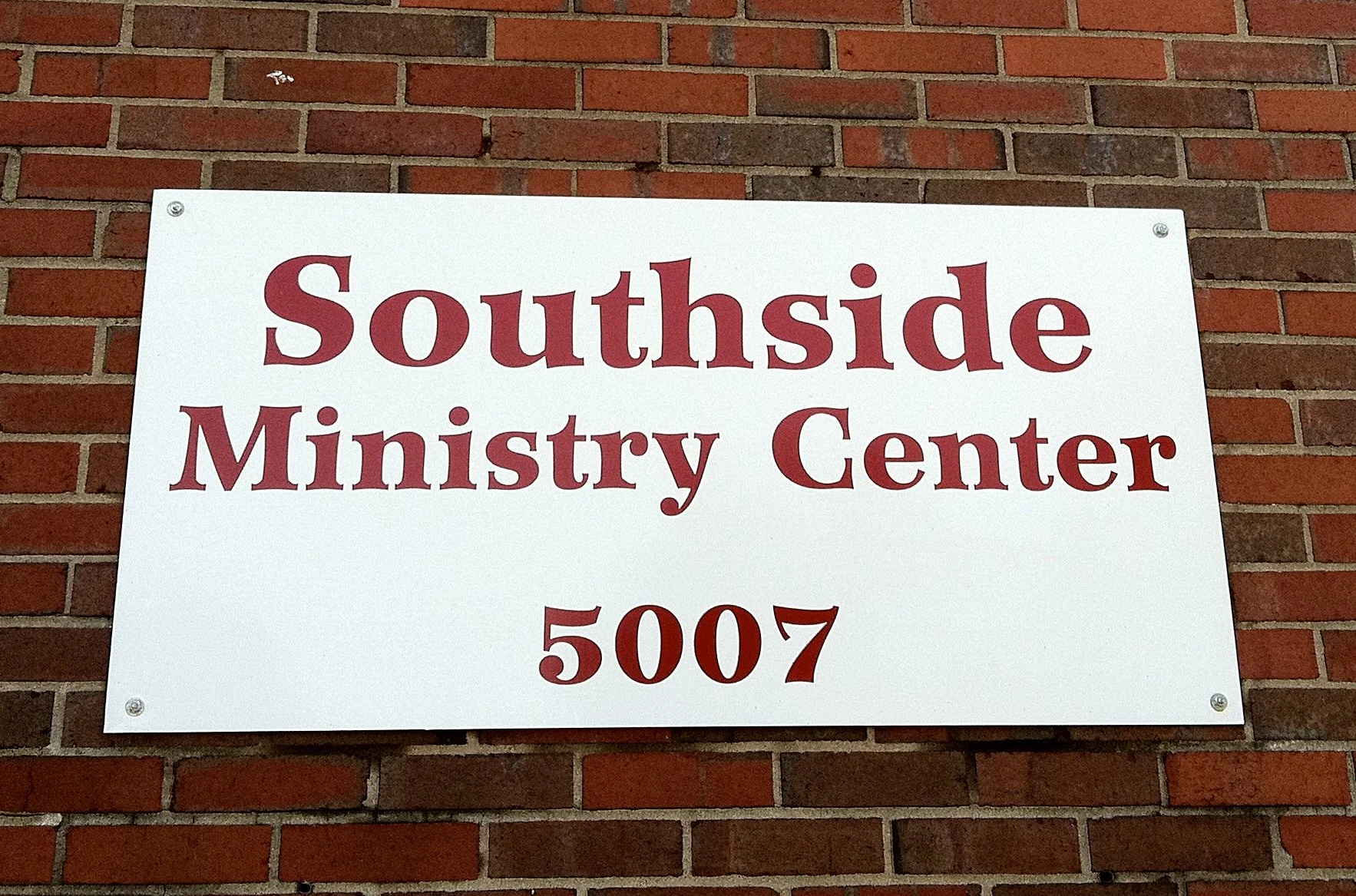
Before there was a Refuge International, there was a Refuge Louisville. And before there was a Refuge Louisville, there was a Southside Ministry Center. And before there was a Southside Ministry Center–or any organized ministry of any sort–there were a number of young people that felt called to missions and loved the nations and wanted to think, work, and pray together to share the Good News of Christ with those that God was drawing to South Louisville and beyond. This was around 2006.
As related by Trent De Loach, the early efforts in the South Side of Louisville were an experiment of sorts to take training and best practices that were being used by missionaries overseas and apply them to reaching the nations God was drawing to Louisville. Representing the missionary side were input from the International Mission Board (IMB) and the North American Mission Board (NAMB) both of the Southern Baptist Convention. Southern Seminary professor, J. D. Payne was connected with the IMB’s Nehemiah Project and was serving as a church planting professor at the seminary. There was a recognition that a new day was dawning in which unreached peoples were not only living in their countries of origin but also in faraway places like Louisville, Kentucky where they were being resettled as refugees from war or political or religious persecution. While it was very difficult and dangerous to share the gospel with some of these unreached peoples in their own countries, there was a realization that unprecedented opportunities were now available to Christians and churches in Louisville and other resettlement cities across America.
Key players in this nascent movement were Trent De Loach, Jonathan Braden, David Allen & Lindsay Shores, Heather Reynolds, Kristen Rothenburger (now Cox), Anthony Eiler, Andrew Wilkinson, and more. Among these, some focused on Iraqis, some on Somalis, some on Bosnians, and some on others. Professor Payne was the chief cheerleader and Long Run Baptist Association (now Louisville Regional Baptist Association) Director of Missions, Jim Carpenter was an ardent supporter. There were neighborhood ethnic mapping efforts through People Group Initiatives and Brian Galloway. Many of these lived in Americana and other immigrant-concentrated apartments along Southside Drive where they ministered incarnationally to neighbors who had recently been resettled literally from the other side of the world. As a result, much of the ministry that took place was on an unscheduled and informal basis in different apartment units–American and immigrant.
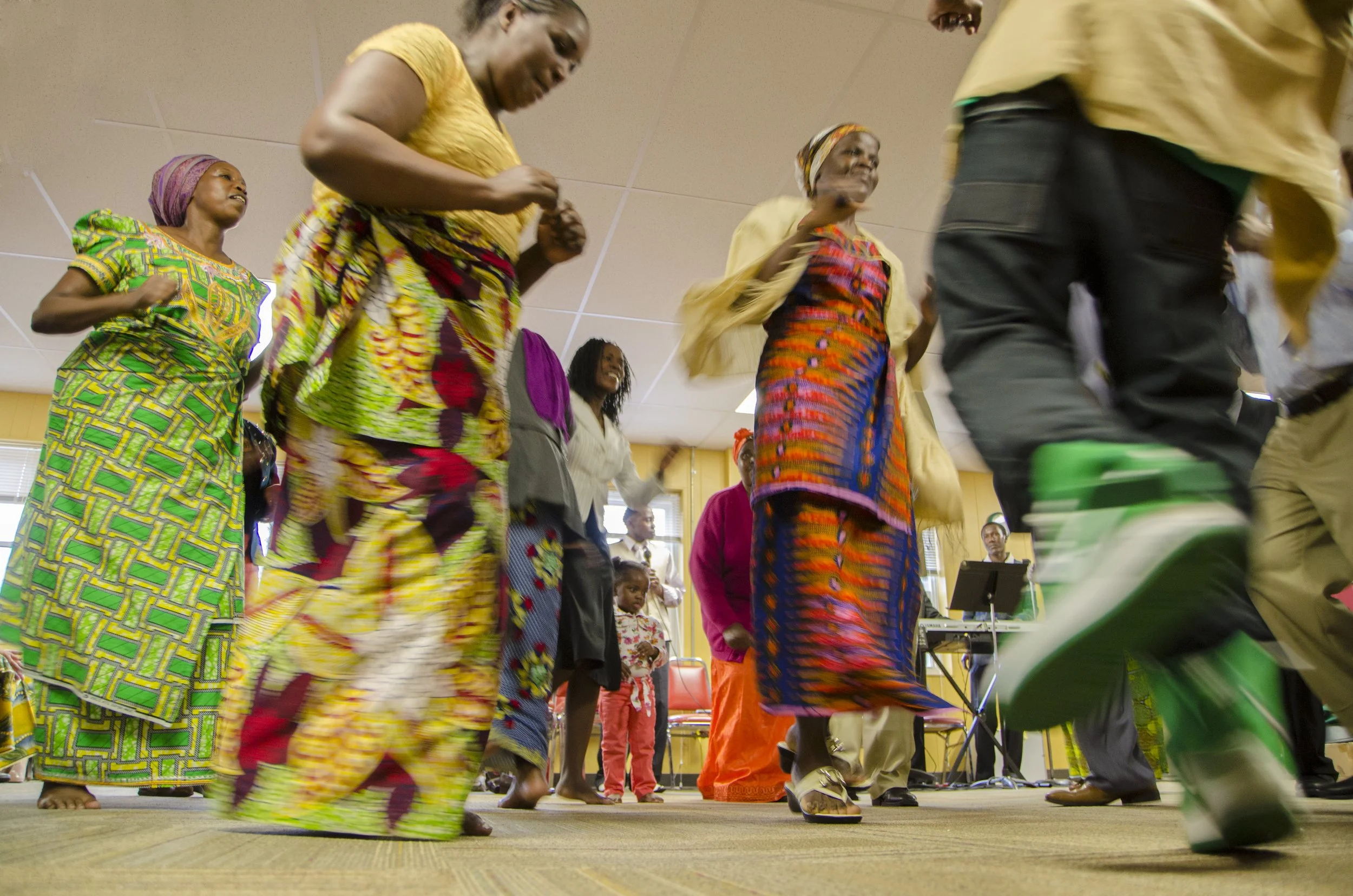
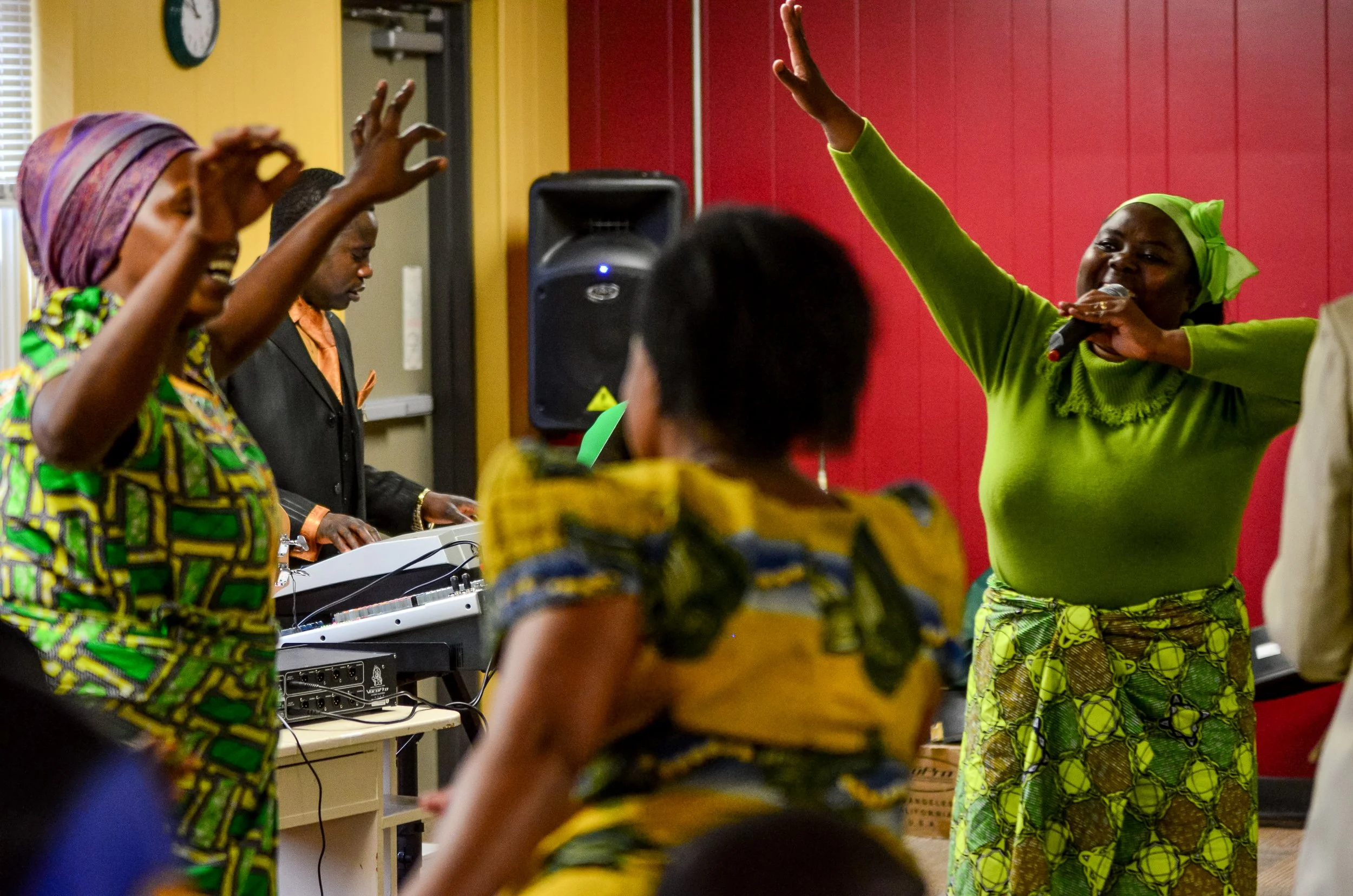
Nearby was Lynn Acres Baptist Church, a declining body with an aging building that was in a prime location for ministry to refugees and immigrants. Space on the Lynn Acres campus was already being used for worship by a number of immigrant churches including the Latino church, Sinda Da Luz; the West African, Evangelical Church Winning All (ECWA) 1; the East African ECWA 2; and a Burmese congregation. Then in 2009 a new multi-cultural church plant named Antioch Church began meeting there as well. When the young missionaries came to know through Lynn Acres pastor, Donny Gilliam, that the church would merge with Grace Community Church, they approached him with the idea of using the space as a ministry center–hosting the ministries of immigrant churches and the ministerial efforts of those desirous to reach the nations God was drawing to Louisville.
However, what was becoming normal life and ministry for those mentioned above was an exciting novelty for many in local churches in Louisville at that time. Churches around the city began hearing about the innovative ministry that was taking place in and around the ministry center that had been Lynn Acres Baptist Church. One church that began taking notice was Southeast Christian Church.
Around 2010, independent of the burgeoning effort at the ministry center at Lynn Acres, Southeast was experimenting locally with another overseas missions strategy called “Community Health Evangelism” (CHE). They had observed this model in Kenya in the work of Victor Mikebanyi and saw potential for it among the nations God was drawing to Louisville. He and Vanessa Parker approached Trent and Jonathan with an invitation to attend an upcoming training. In the context of that training, Trent and Jonathan were asked, “If there were an effort/organization to focus on immigrants, what would it be?” They were then invited to make a proposal for such an organization. Exceeding their expectations by far, Southeast offered in essence to fund the startup of the ministry, covering ministry and staffing expenses for three years!
In 2011, the above proposal and funding began to formalize ministry in different ways. In no particular order, the name of the ministry center and of the organization became Southside Ministry Center (SMC). A 501(c)3 nonprofit organization was registered under the same name, and Jonathan Braden began to serve as director with Trent De Loach as co-director. The first vision statement was “Blessing the nations of Louisville so that we can be a part of fulfilling the promises of Genesis 12:1-3,) and the initial mission statement was “Serving and equipping people and the church by providing cross-cultural resources to see Christ transform lives.”
Ministry in those days continued to be located in and around the immigrant-heavy apartment communities within walking distance of Southside Ministry Center. It consisted of cookouts, bouncy houses, block parties, ESL and citizenship classes, tutoring, and activities for children which were conducted by mission teams and local churches that were hosted by SMC staff and interns. Ministry also included cross-cultural, people group, and other missions trainings to equip members of local churches to reach unreached peoples in Louisville.
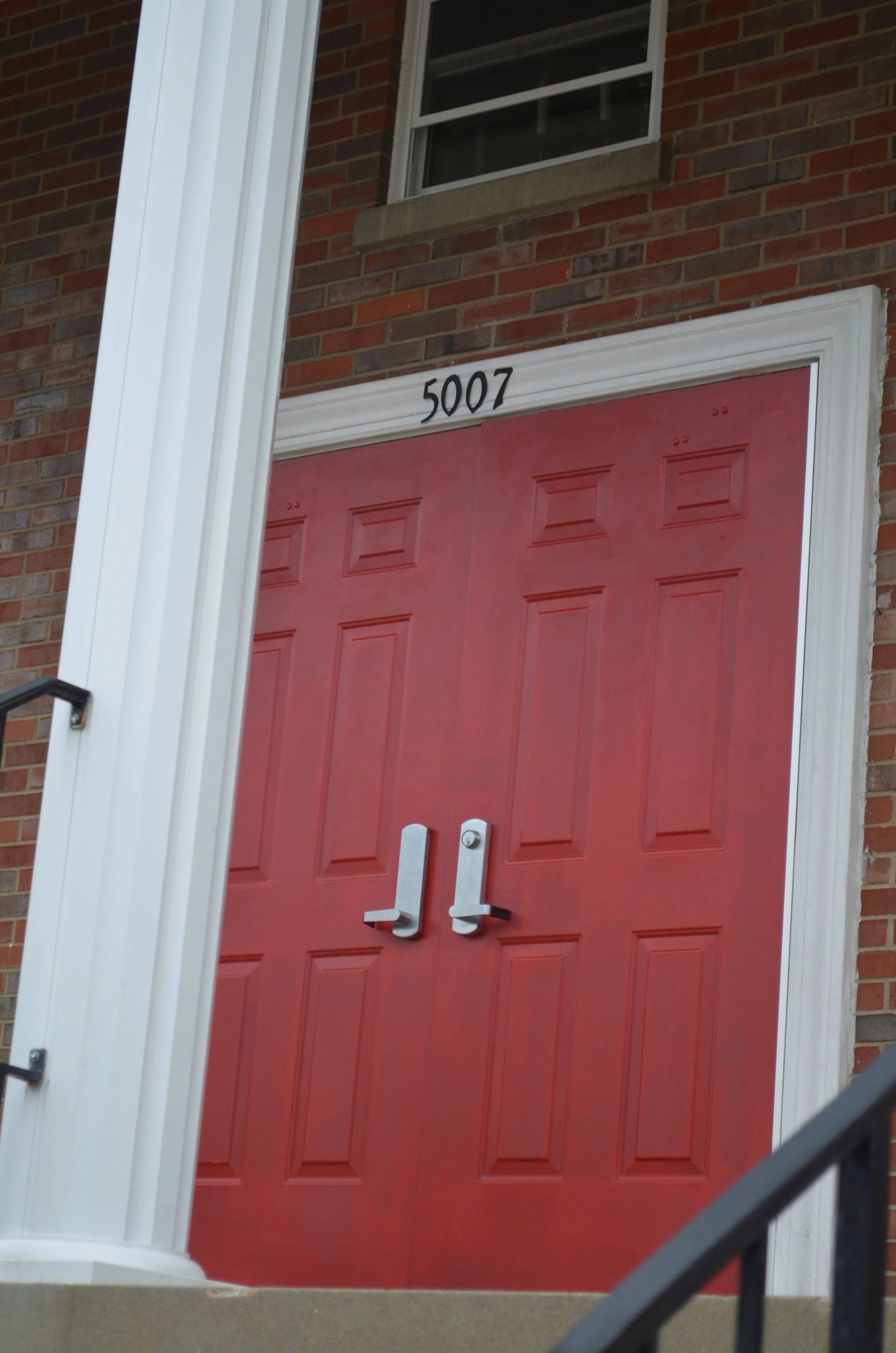
In 2013, a decision was made to rebrand the ministry, Refuge Louisville. On the one hand, this name change was borne out of a recognition that refugees and immigrants were not being settled exclusively in the South End. On the other hand, it stemmed from a desire to communicate the mission of the organization and not merely the location. At that time the image of a red door was chosen as the new logo because of its connection with welcome in church history.
2014-15 were years of transition for Refuge as first Trent and then Jonathan stepped down from leadership. In addition, and around this same time, mounting maintenance costs made continued operation from 5007 Southside Drive untenable, so ministry began a period of ministry without a centralized office. But what might have seemed like a setback spurred Refuge on to pursue ministry in a decentralized fashion–wherever refugees and immigrants in Louisville might be found.
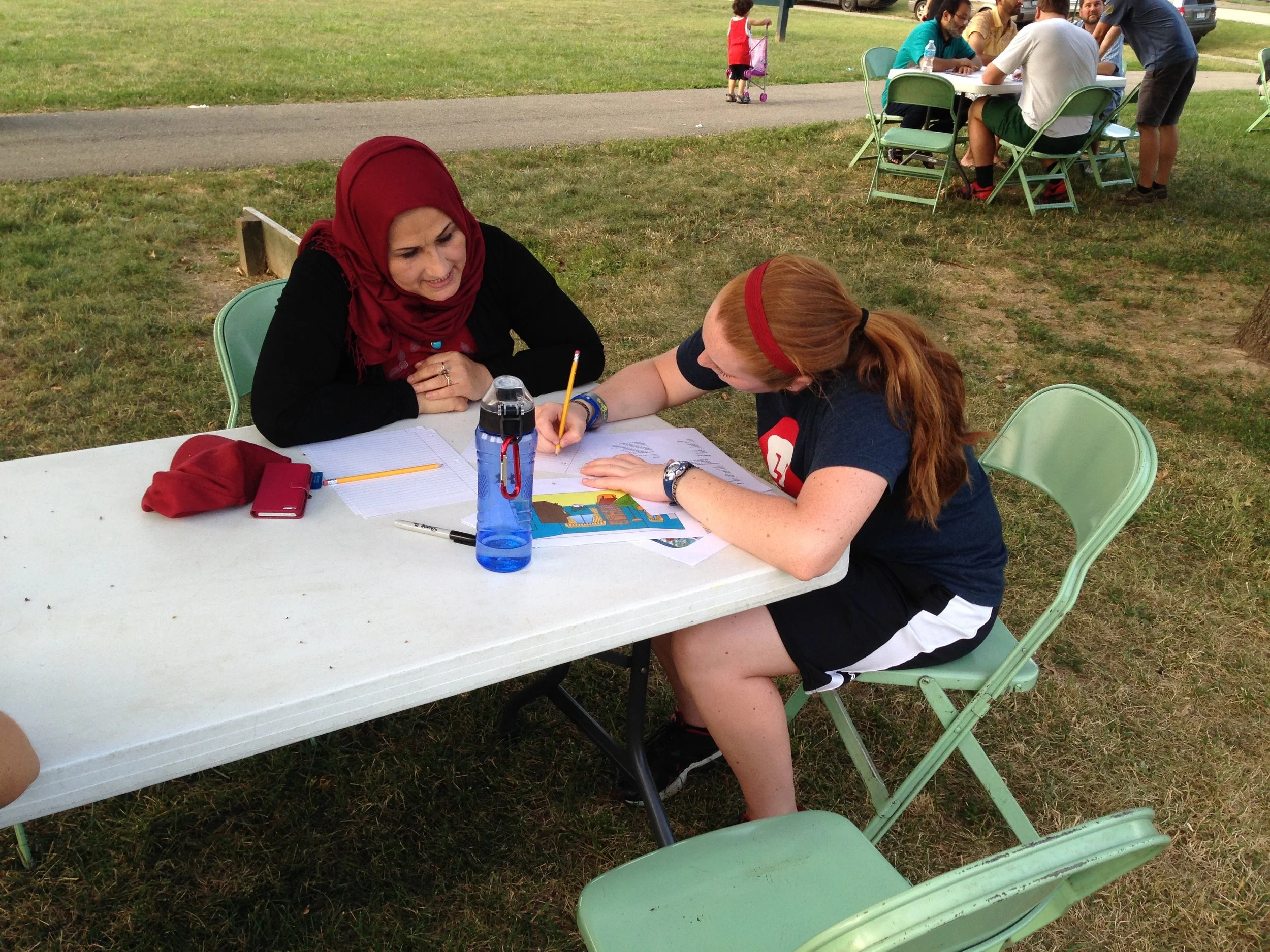
From 2016 to 2018, John Barnett served as director. This era saw the advent of “English in the Park” in the Norfolk/Maplewood neighborhood in West Buechel. It also saw a significant board change and a new formal partnership with Launch, a property owner and management company focused on providing affordable housing to Louisville’s immigrant population. During this period, Refuge’s name changed from Refuge Louisville to Refuge International to acknowledge both the international populations that we serve as well as the aspiration to scale and have impact beyond the city of Louisville. And a new but related mission statement was adopted: “to glorify God by partnering with local churches to love refugees and immigrants.”
Beginning in February of 2020, Matt Reynolds began serving as director. This era has seen the continuation of some volunteer programs (e.g., English Mentoring); the expansion of others (e.g., ESL–from Community Of Friends Focused On Effective English [COFFEE] to Refuge Network of ESL Ministries); the rebranding and relaunching of previous efforts (e.g., our summer student missions camp, The Nations Next Door and a previous children-focused ministry, Right Start), and the introduction of a host of new events (e.g., Blessing Days, Community Learning Opportunities, “Come alongside!” events, and Volunteer Connection Events). We also settled on a new vision statement: “to see a Christian friend for every immigrant in Greater Louisville.”
In 2025, the above mission was fleshed out strategically in the creation of the following incomes for both of the constituencies that we serve. With respect to churches, we seek to: 1) mobilize local churches to love and serve immigrants; 2) connect members of local churches with immigrants in friendships; and 3) impact local churches to become more hospitable spaces for immigrants. And with respect to immigrants, we hope to see: 1) thriving in their new home; 2) friendships with members of local churches; and 3) faith in Jesus Christ as Lord and Savior.
At the writing of this history, we poised to enter a new era of direct ministry to immigrants and influence among churches beyond Louisville! Lord willing, in the spring of 2026, our Hospitality Guide For Local Churches video course will be available for purchase and use by any church in the nation! The goal of this course is to help churches anywhere become more hospitable spaces to refugees and immigrants in the neighborhoods around their church campuses. And in the spring of 2027 we plan on opening a DOJ-accredited Immigrant Legal Services Center on our office campus which will allow us to meet one of the biggest of immigrants’ felt needs, i.e., legal counsel, at a greatly discounted price.
While the names of different directors have been mentioned in this history, the ministry of Refuge would not have been possible without the significant contributions of numerous board and staff members. Following are some of those who have served in these capacities and have been used by God to hold Refuge accountable to and execute its mission. Board Members: Vanessa Parker, Mark Wardlaw, Mark Mihalyov, Ben Hedrick, Frank James, Greg McDearmon, Ryan Fullerton, Employees: Brad Bell, Emily Cain Del Rosario, Matt Mihelic, Samir, Samuel Rai,
As we look around and to the future, we are humbled, thankful, and hopeful; humbled at the vast number of immigrants in our land who have no Christian friend and have never heard the gospel and at the gap that continues to exist between immigrant and non-immigrant churches; thankful to God for a ministry like Refuge that partners with churches to address these needs; and hopeful for what God has in store!